

Intro: To Tecumseh
I wrote this article aimed at a national problem, but tailored to my new (and old) home in Florida. I’m posting it here because the problems we face here in the panhandle are similar to the problems we faced in Lenawee with neighboring districts. I hope to encourage educators in both my current and former districts that they are worth more than they are paid, and it’s time education return to the forefront of our national discourse.
________________________________
“We need to pay our teacher’s more!” was repeated often in the Facebook groups when I was a write-in candidate for school board in 2024. The district faced declining enrollment, declining grades, and a budget shortfall not entirely caused by the former. The district had given teachers a healthy raise several years prior, but that raise was quickly eaten up by inflation. As a military veteran, I could definitely relate.
If we all agree that teachers should be paid more, why aren’t they? As a school board candidate with an I-O psychology background, I started asking questions. In this article, I will attempt to answer why teachers deserve 100k salaries, why it hasn’t happened yet, and the consequences of shorting educator pay. As always, my writing is imperfect because it is authentically human. I never use AI.
Do Teachers Deserver $100k?
We can answer this question objectively by examining the skills required to be a public school educator and applying them to other career fields. O*Net Online is a common tool I-O psychologists use to break down occupations into their skill requirements. Below is a short list (5 of 26) of the skills required to be a public school educator.
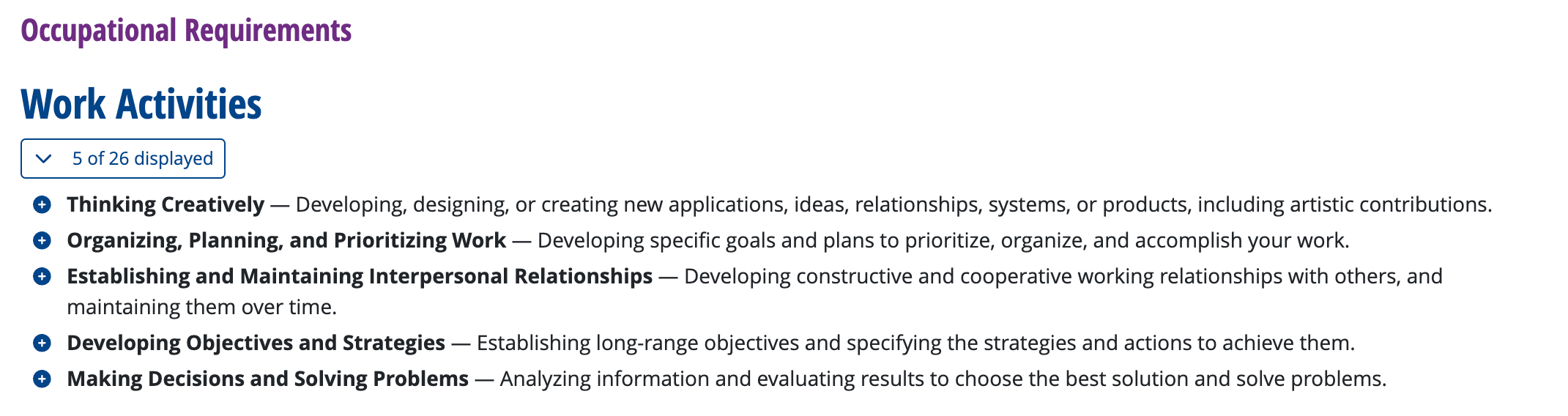
Source: O*Net Online
As a purely anecdotal example, these five bullets are at the top of my resume and my job description, almost word-for-word, as a strategic planner for one of the largest defense contractors in the world. As it happens, I am also a substitute teacher. Recently, I “subbed” for a friend of mine in Pensacola. The level of detailed planning she exercised for that class rivaled my tougher days at work.
When you combine the level of responsibility, planning, and education required to be an educator, then add in the background checks and recurring training, it adds up. An E-5 in the military living here in the Florida panhandle makes close to $80k per year with no degree requirement. A comparison to military service may seem far-fetched to some, but as both a veteran and an educator, I would argue that they are more similar than most realize.
So, Why Aren’t We Paying Teachers Enough?
There is no single answer to this, but there are major factors differing nationally and locally.


Administrative costs are skyrocketing. One major driver of this trend is non-teaching staff, to include para-educators that handle students with disabilities. These roles are absolutely crucial as, without them, educators are forced into taking a triage approach in their classrooms. As a father of a special needs teen, I wrote an article on this very topic in 2024.
Zooming in to the Florida panhandle, a state that already ranks at the bottom in teacher pay, disparity seems to be an issue. When the Florida legislature raised the starting-pay target in 2020 (HB 641) without fully funding smaller districts, counties like Escambia were forced to stretch state funding much further than counties like Walton with higher property value. With an arguably over-reliance on an already thin state budget, some counties simply cannot keep up.
The Cost of Attrition
Last year, public school teachers earned about 25% less than comparable college graduates in other fields. When people believe their inputs are not matched by outcomes relative to a relevant comparison group, this is called perceived inequity. The cost of perceived inequity is typically attrition, which the Florida Teacher’s Association has already noted:
Last year, 31% of classroom teachers had fewer than four years’ experience, and the state’s own 2026-27 critical shortage report shows vacancies are increasingly filled by out-of-field or temporary teachers, with the number of certified teachers being replaced more than doubling over five years.
Source: https://feaweb.org/release/floridas-teacher-and-staff-vacancy-crisis-continues/
Schools cannot replace educators the way many organizations replace skilled employees. Teachers build relationships and reputations with their students. Trust is not easily earned, more so with adolescents. Schools and classrooms are filled with nuance reflecting the communities in which they belong. If we lose teachers, we lose the next generation of students.
Final Thoughts
Texas Governor Greg Abbot (R) stated in 2018 that educators should have a pathway to $100k salaries. The salient point here is that it is a pathway, not a salary floor. Setting a goal for our brightest and most tenured teachers to reach the six-figure level is an attainable incentive from a state budget perspective, especially in a tourist-heavy state like Florida running a surplus.
Full-time educators are already working side-jobs to make ends meet. The lack of financial incentive sends a message that providing our children’s education is not worth their full time. Is this the message we want to send?
This article was initially posted on my X account:
